

Dental Bridges in Catford
As the name indicates, a bridge is a link or connection between two permanent structures. Likewise, a dental bridge attaches the restorative teeth to the natural teeth on either side of the gap. Those restored teeth are the actual bridge. This bridge acts as your new tooth or teeth, as the case may be, closing the gap, restoring your smile, and returning your mouth to its proper alignment.
| Before Bridge | After Bridge |
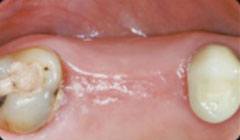 |
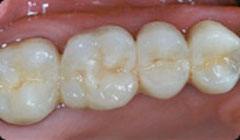 |
Bridges are often constructed of gold or metal foundations, however Dentist completes them by fusing porcelain to that foundation. This ensures that the bridge will support the normal functions of the mouth. And results in an unbroken, natural and youthful-looking smile.
The three main types of dental bridges:
Traditional or Fixed Bridges?
These are the most common types of bridge work which involves creating a crown for the tooth or implant on either side of the missing tooth, with a pontic, or false tooth, in between. The Dentist uses both porcelain and ceramic, which is fused to the metal foundation. There are also other types of bridges available as outlined below
Maryland Bonded Bridges (also called a resin-bonded bridge or a Maryland bridge)
These are used primarily on front teeth. This is usually the most economical choice when the abutment teeth are health and have no large fillings. Bridges are designed of porcelain and the gums are supported by a metal framework. Essentially, metal “wings” are bonded to your existing teeth on each side of the bridge.
Cantilever Bridges
These bridges are used when there are teeth on only one side of the missing tooth or teeth. In this case, the pontic is anchored to one side over one or more natural, adjacent teeth. If there are no adjacent teeth, a Dentist might recommend a dental implant – a metal post that is surgically embedded into the bone and then capped with a crown. This implant can then serve as the abutment.
Dental Bridge Procedure Step by Step
The procedure begins with preparation of the natural teeth, or “abutments” in dental speak.
Dentist will shape the abutment teeth so that the ends of the bridge will fit comfortably on each one.
Next, he takes an impression of the area. He then sends the impression to our lab where your new restoration will be crafted. While this new tooth is created, we will provide you with a temporary restoration. Dentist is known for his care in creating temporary restorations that closely resemble your natural teeth so you can go about your daily life without a second’s worry over a missing or unattractive tooth.
During your second visit to the Hillview Dental Centre in Catford SE6, we will proceed with the placement of your final restoration. This bridge will be fitted comfortably into the mouth. We will make every effort to ensure that the new bridge feels exactly like your natural teeth.
The final step in the process is to cement the bridge into your mouth, leaving you with a beautifully restored smile.
Caring for Your Bridge
When you have a bridge, it is more important than ever to brush, floss, get regular cleanings and see your dentist regularly. If you don’t control the buildup of food debris and plaque—which is the sticky film of bacteria formed from food acids–your teeth and gums can become infected, requiring further treatment and resulting in the possible loss of the bridge. Dentists might also recommend using floss threaders that help remove bacteria from hard-to-reach spaces between the bridge and adjacent teeth and gums.
For further information, please click here for details on how to contact us.
Social Media
 |


